Digital Product Designer HMI & Industrial IoT · Venice, IT
Design problems are rarely just design problems.
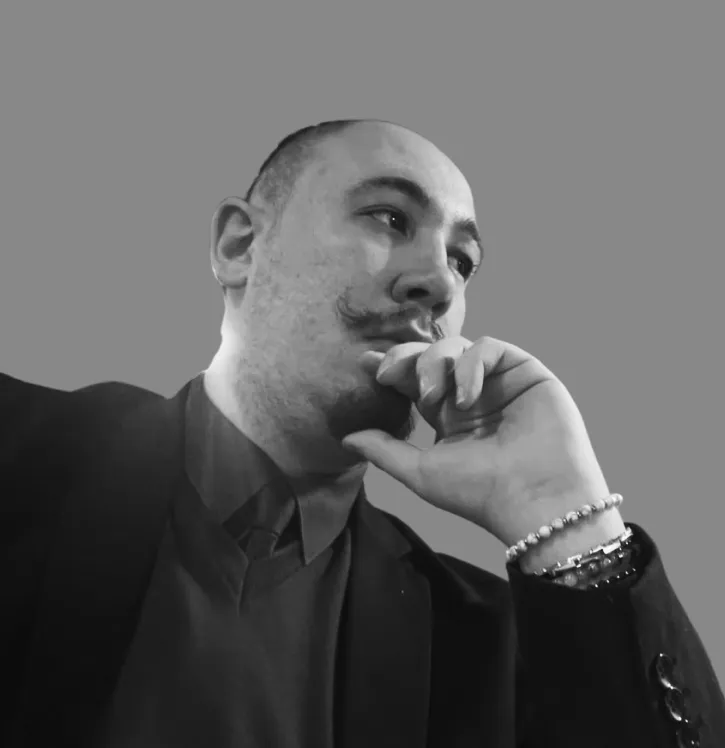
Eight years, one job: a machine or a sensor produces data, and somebody has to act on it. CAN frames off the ECU at TEXA, test-rig telemetry at Bridgestone, the PLC on every machine at SCM. I design the screen in between: HMI and machine interfaces, plant-management platforms, and the control software that can cost someone a shift if it lies to them. The title is usually lead UX/UI designer and product owner, and I’ve led design teams and carried products as their owner.
An operator isn’t a customer to be delighted. They’re an expert under time pressure who needs one obvious next action, not a tour. A plant has no single user: the person at the machine, the manager over the floor, and the service team behind both need opposite things from the same system, on screens that have to survive gloves, glare, and the fact that a wrong reading can stop a line. Eight years designing, seven of them in industry, and I design for that by default.
I start where the work happens. The stated problem is almost never the real one; it’s upstream, in a workflow, a handoff, or a decision nobody has revisited in years. I design in cycles, test with the people who’ll actually use the thing, and hand over a system a team can extend rather than a pile of one-off layouts. I design in Figma, and I read and write the code it becomes.
Most of it ships under other people’s brands: platforms and machine interfaces across four sectors and 40+ countries. I’m not building a name on top of other people’s products; I’m making their products work, and the credit stays with them. Discretion is part of the craft, not a limit on it.
When I can show the work, it looks like this.
- Strato a CNC plant’s control room, my own concept, taken from a blank brief to a product you can click through today.
- SCM Digital Portal SCM Group’s industrial-IoT platform, rebuilt from a wall of raw numbers into the tool woodworking shops run production on, then put in their pocket as a mobile companion.
- Tescam Bridgestone’s tire testing, moved off scattered spreadsheets onto one auditable record.
- A development process from nothing not a screen at all: a development process, designed across three departments that each had their own.
Most of the rest I can describe but not show.
Based in Venice, working with teams anywhere. Companies bring me in to own a problem end-to-end; studios bring me in for white-label overflow under their own brand. Either way I’m after the same thing: the confusing, high-stakes, inherited mess between a person and the system they have to operate, and the chance to make it honest.
-
8
Years designing
-
7
Of them in industry
-
40+
Countries the work runs in
-
4
Sectors
Components 8 in this library
Capabilities
- Industrial UX & HMI Design 01
- Design Systems 02
- Product Ownership 03
- User Research 04
- Process & Systems Design 05
- Design Team Leadership 06
- Frontend-Aware Design (Figma → Code) 07
- AI-Assisted Workflows 08
The record
Roles, companies, cities and years, as they stand on LinkedIn and the CV.
Drag the dot
2017
- Work experience 2023 — present SCM Group · Digital Product Designer · design team lead · Rimini, hybrid Industrial IoT platform in 40+ countries; production dashboards, mobile companion, ticketing.
- Work experience 2022 Atos · UX Design Specialist · product owner for Tescam (Bridgestone) · Milan
- Work experience 2021 Telebit · UX/UI Designer · Treviso
- Work experience 2019 — 2020 TEXA · UX/UI Designer · low-level diagnostic interfaces · Monastier di Treviso
- Personal work 2018 — present Independent consulting · Alongside the roles above Process & systems design for IFIN Sistemi · Zucchetti (2022), among others.
- Education 2023 — 2024 Italian Design Institute · Master in Interior & Experience Design
- Education 2021 — 2022 Google · UX Design Certificate
- Education 2017 Technical high school · Diploma: Perito in automazione e robotica (automation & robotics technician)
Book half an hour or write
Got a problem worth solving properly?
A screen operators fight with, a platform that needs a senior designer, a studio short of one? I reply within 48 hours.