Case 01 / 05 Product design + front-end · self-initiated concept
Strato
A CNC plant’s control room, designed and built end-to-end, and live.
Fig. 0 · Strato · product walkthrough
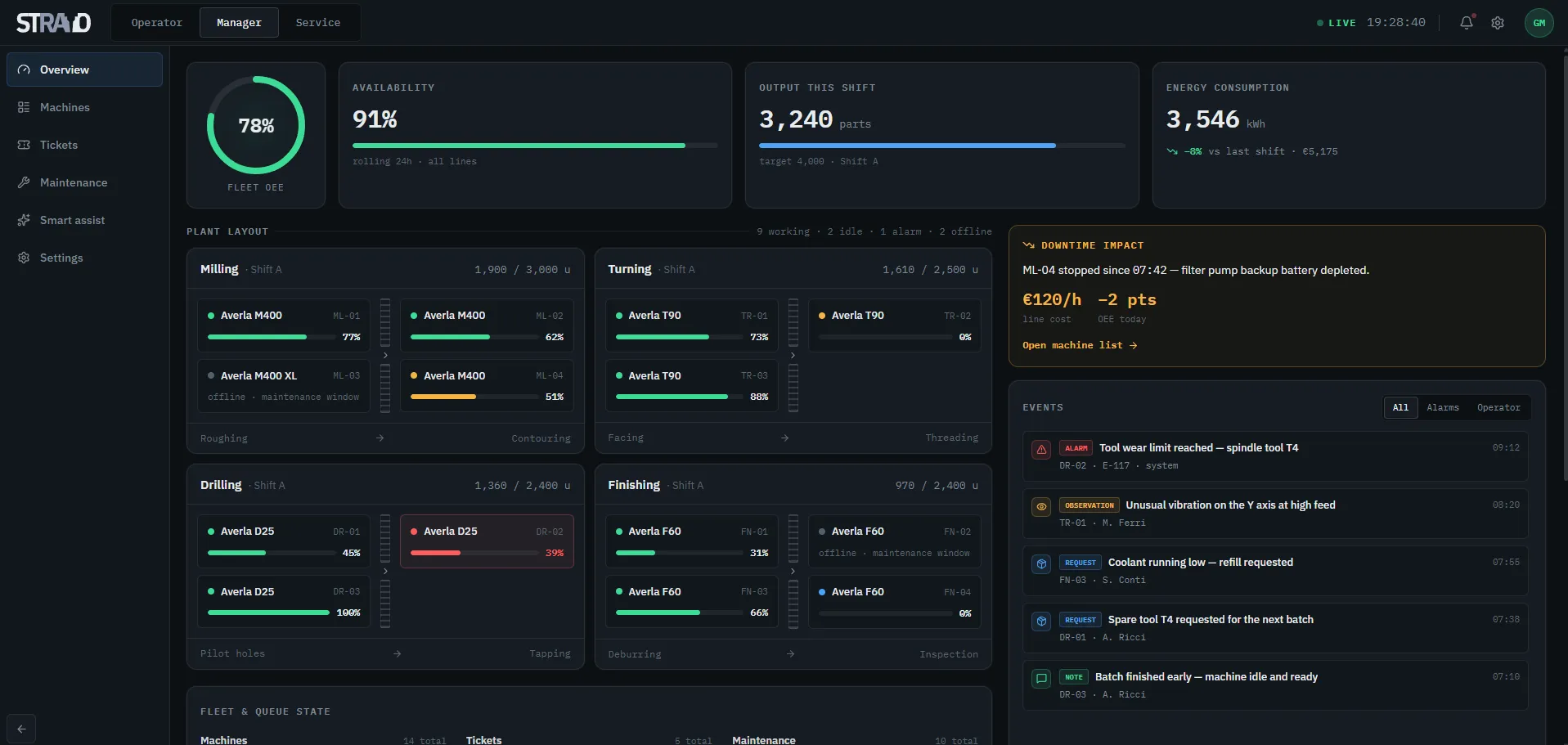
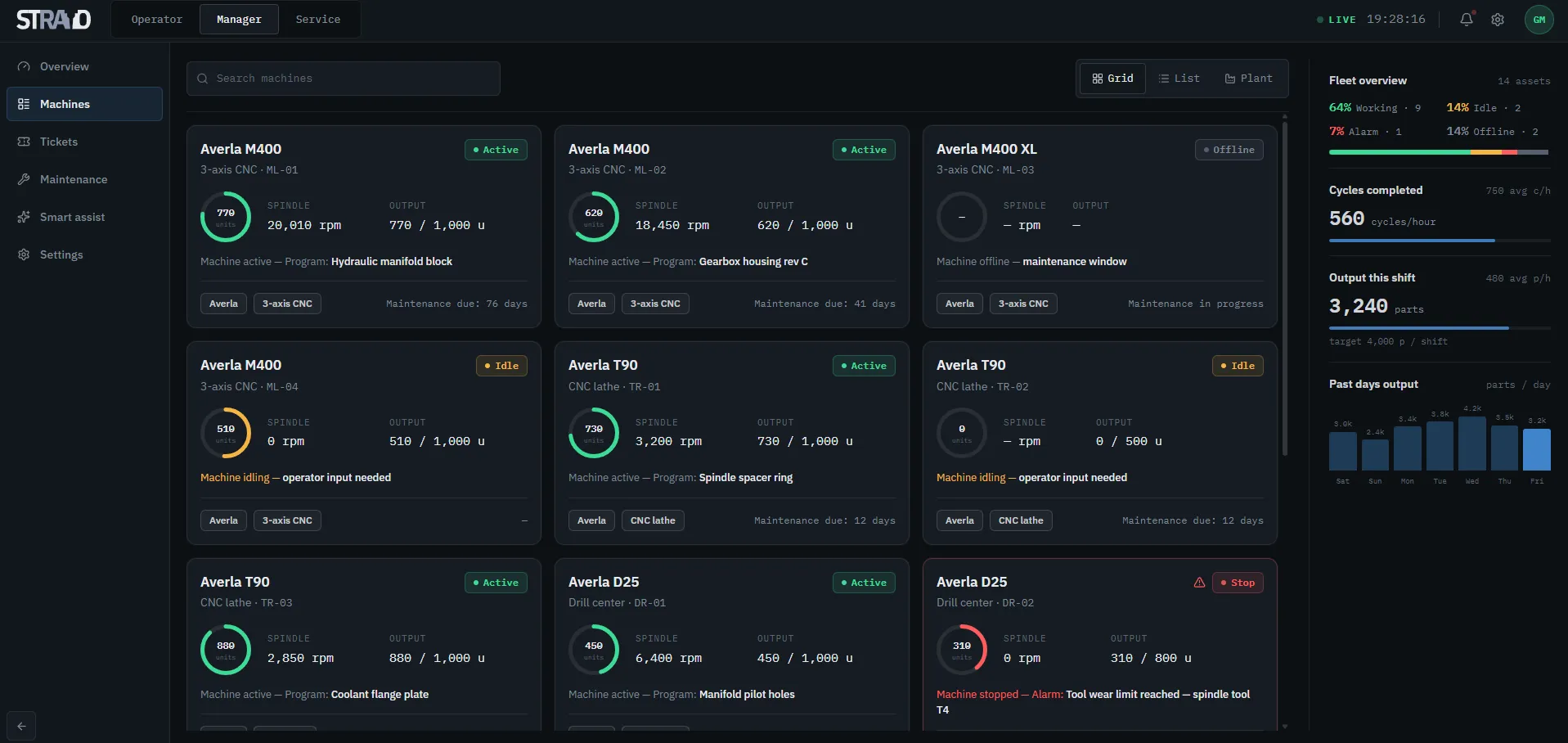
A plant-monitoring and machine-control platform for a CNC machining plant (control room, floor view and the operator’s HMI), designed and built end-to-end, and live. One system, three users: the operator at the machine, the manager over the floor, and the service team behind both.
01of 04
Context
Strato is a concept I scoped and built myself, solo, from the brief a real CNC-plant owner would give. Operators who can run and recover their own machines from the HMI, managers who read the floor at a glance, and a service team that can support both. Everything on screen is running code; the plant is a fiction, simulated once as an IoT fleet would be: every machine reports its state, every view reads from that feed.
02of 04
Problem
A plant has no single user. The operator needs one machine and one next action, mid-shift with their hands full; the manager needs the whole fleet, exceptions first. And industrial software loses the room the moment a number looks invented or an AI suggestion reads like a guess.
03of 04
Process
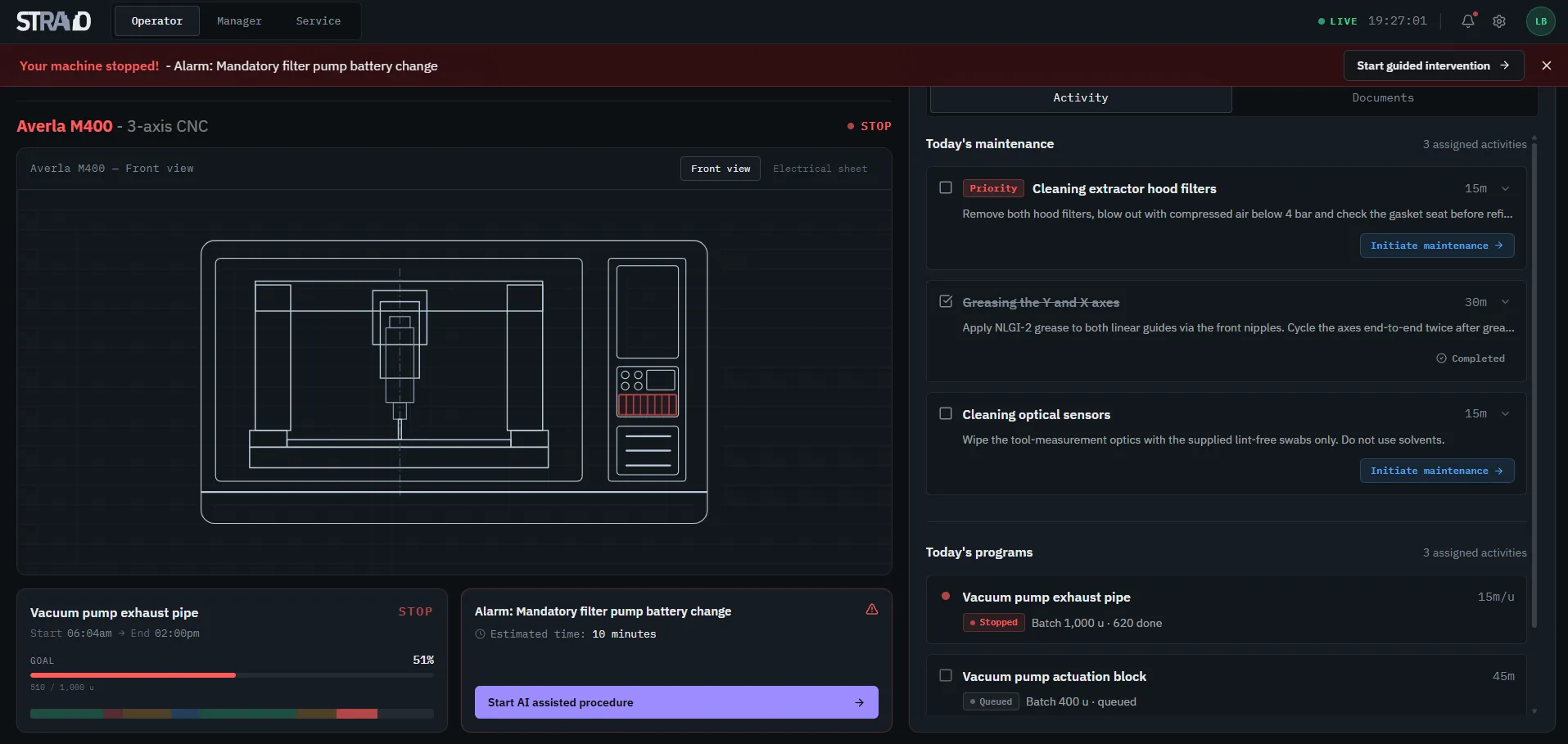
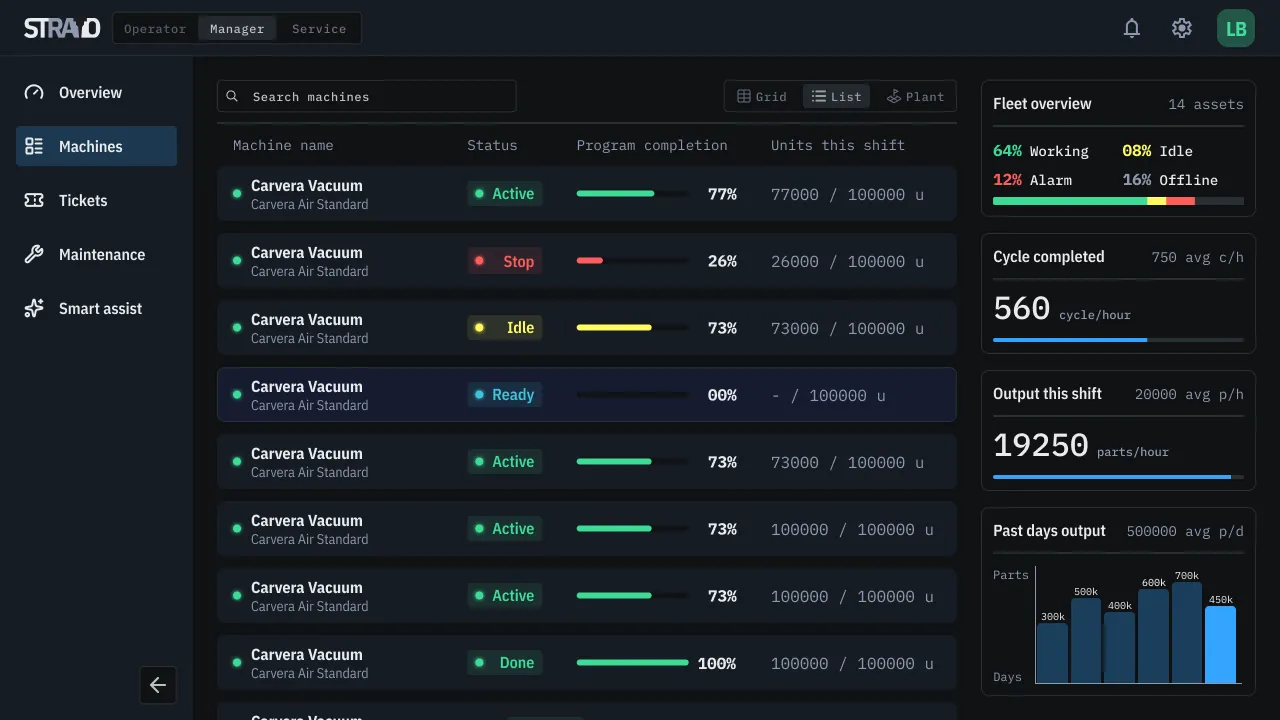
Split by who is standing there. The operator view puts one machine on screen as its own electrical drawing, with its live program, its alarm and one primary action; the manager view is the inverse: the fleet as status pills, exceptions first.
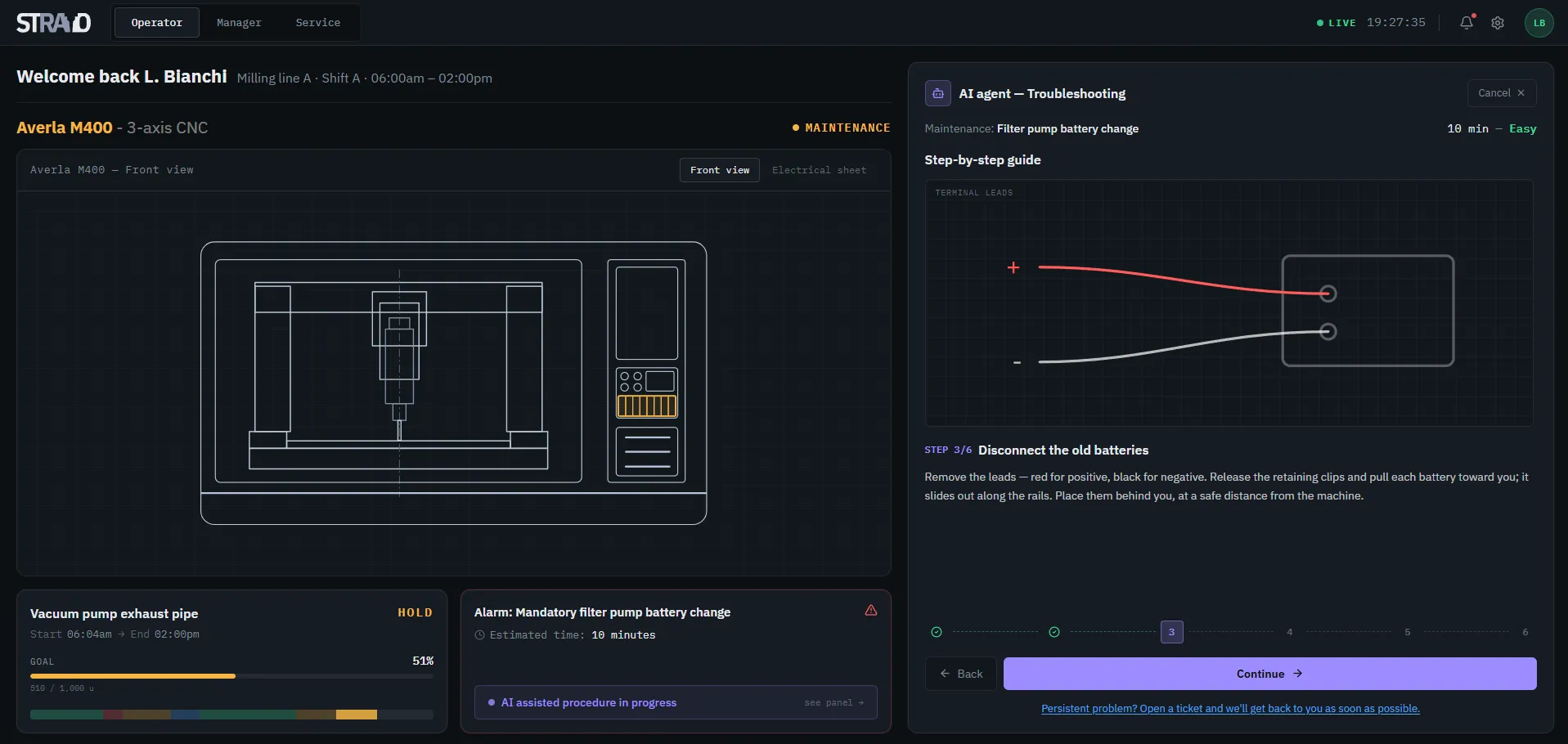
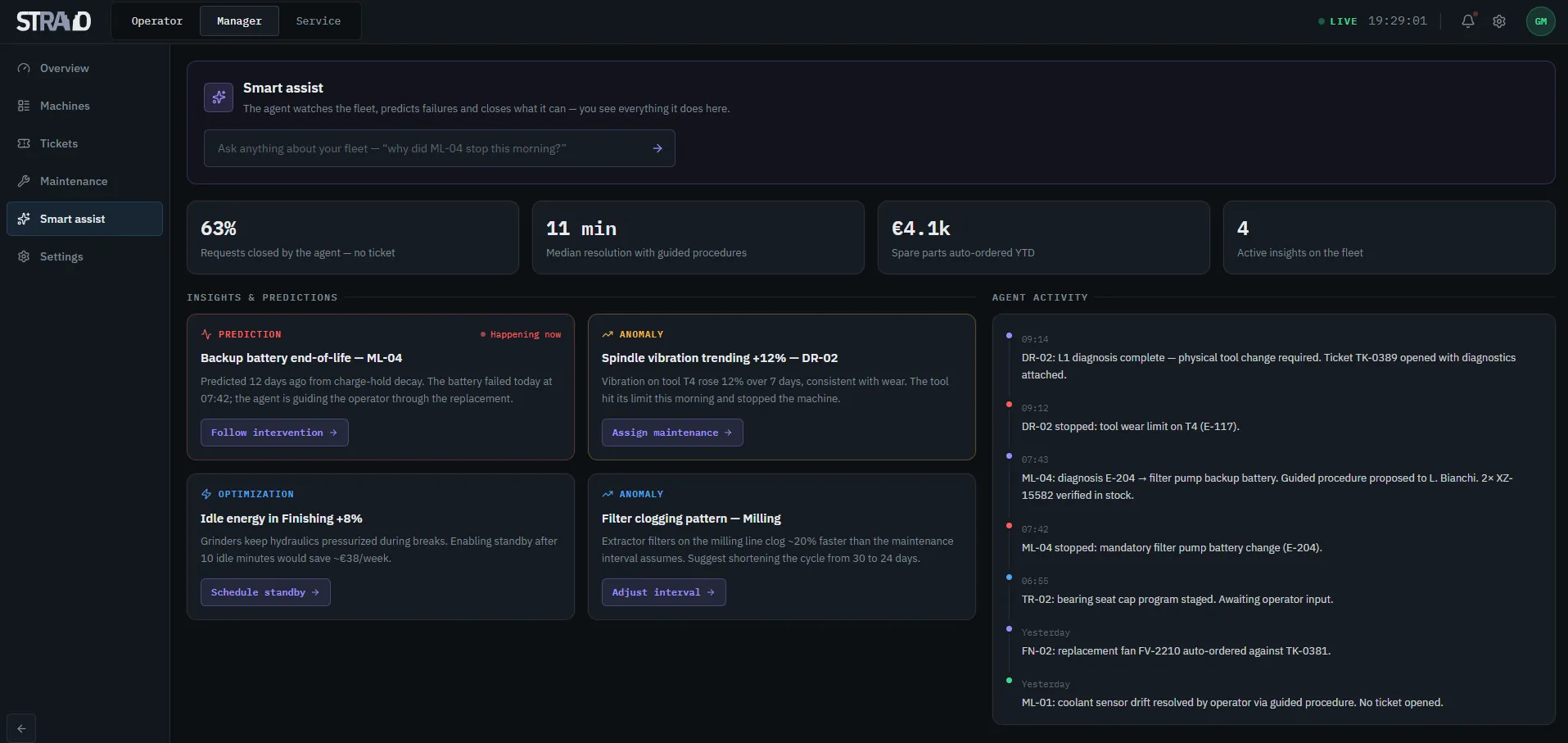
One event drives the whole app. A machine down on a filter-pump battery runs end to end: the operator works a six-step guided repair, and every count, timeline and status pill updates live. Service is the last resort, reached only on escalation, with the ticket pre-filled with everything already tried.
AI as a procedure, not a personality. The guided repair will not pass step one until the spare parts are confirmed in hand, and everything the agent touches wears one reserved colour, so a suggestion is never mistaken for a fact.
04of 04
Outcome
A working product demo you can open right now. Not a shipped product, but the whole job in one artifact: roles, information architecture, a design system, live state and a restrained use of AI in a safety context. What it has not had is a real operator’s hands; that is the next revision.
Version history What was tried first
What it could have been
The finished screens argue for themselves. These are the forks: what was tried first, and what replaced it.
- Fork 01
One interface, or one per role?
v1Rejected
A single screen serving the whole plant: the ordinary answer, and the cheaper one to build and maintain.
v2Shipped
Three views, split by who is standing there: one machine and one next action for the operator, fourteen assets with the exceptions on top for the manager. An interface built for “everyone” serves no one.
- Fork 02
Does the operator get to talk to the agent?
v1Rejected
Giving the operator the same free-text assistant the manager has. It demos well and it is what everyone is shipping.
v2Shipped
The box belongs to the manager and to service and never reaches the floor. Operators pull procedures; nothing instructs them. Otherwise repairs become stories passed down rather than knowledge that stays with the company.
- Fork 03
Is the assistance the product?
v1Rejected
Letting the AI layer become the thing being sold, which is the pull with anything assisted right now.
v2Shipped
Monitoring stays the core, the entry tier if this were sold. The assistance is a layer a plant can take or leave, marked in a colour that says where it starts and stops.